Planning a Trip to Lincoln Park Zoo
Lincoln Park Zoo’s hours of operation change seasonally and for special events. Please check the Current Hours page and banners on the lpzoo.org home page for updates on time changes, early closures, or animal building closures.
Back to top
Where to Get First Aid or Other Assistance
If you have a question or need assistance while visiting the zoo, visit Searle Visitor Center or call 312-742-2000. Any nearby staff member or volunteer wearing a green polo marked with the Lincoln Park Zoo logo can also provide immediate, on-site help.
Back to top
Accessibility Resources for Your Visit
Accessibility Map
Lincoln Park Zoo’s Accessibility Map is a high-contrast version of the zoo’s map. It identifies locations with high sensory experiences, low sensory experiences, captioned videos, tactile experiences, benches and rest stops, and spots to burn off some energy. The map also marks the length of zoo paths to help determine travel distance and time and location of accessibility resources and amenities.
Click here for the Accessibility Map
Visual Schedule
The Visual Schedule provides a visual and tactile way for guests to prepare for, enjoy, and reflect on their visit to the zoo. We encourage guests to use the visual and tactile tiles in the way they find most helpful. The visual schedule can assist guests in transitioning from animal buildings, taking a break, or knowing when it is time to go. Use the final page to reflect about your trip.
You can borrow copies of the Visual Schedule in English and Spanish at Searle Visitor Center and the Member Center. You’ll be asked to leave an ID as a deposit.
Click here for the Visual Schedule
Social Narrative
Lincoln Park Zoo has a social narrative of a typical zoo visit available on the KultureCity app.
You may also access it at this link.
A social narrative prepares guests for the sights, sounds, noises, smells, and other sensory experiences they may experience when they visit Lincoln Park Zoo. This resource can help guests focus on key details of a typical zoo visit.
Some programs and special events, like camps and ZooLights, may have their own social narratives available upon registration.
Quiet Rooms
- The zoo’s quiet rooms are located in Searle Visitor Center. Ask staff or volunteers for access.
- The quiet rooms are commonly used for breastfeeding, sensory relief, and prayer.
- Each room has a lockable door, but is also located in a staff-only area. Doors can be left open or closed based on your preference.
- For more quiet, low-sensory areas around the zoo, check the Accessibility Map.
Sensory Bags
You can check out sensory bags containing fidget tools, noise-reduction headphones, and other resources (for no cost if you leave an ID) at Searle Visitor Center.
Weighted Lap Pads
Weighted lap pads are also available upon request (at no cost if you leave an ID) at Searle Visitor Center.
KultureCity App
Download the KultureCity app to access the social narrative or to recommend Lincoln Park Zoo as a sensory-inclusive destination.
Back to top
Transportation
Paid Parking Reserved for People With Disabilities
The entrance to Lincoln Park Zoo’s paid parking lot is at 2400 N. Cannon Drive. This lot includes 28 accessible parking spaces and those spaces often fill up on summer weekends and during popular events.
Accessible Parking on Neighborhood Streets
There are designated areas on northbound Stockton Drive for vehicles displaying accessibility placards at:
- West Gate
- Farm-in-the-Zoo
- South of the Café Brauer turnaround
- Between West Gate and Lincoln Park Conservatory
Public Transportation
Access the zoo by bus via the 22, 36, 151, and 156 routes. To arrive by CTA train, take the Brown and Purple line to the Armitage station or ride the Red line to Fullerton station. Both stations are accessible and located about a mile west of the zoo. To learn more about accessibility information for public transportation, visit Chicago Transit Authority’s accessibility page.
ADA Paratransit Services
Guests using paratransit services as outlined by the Americans with Disabilities Act should be dropped off and picked up at our East Gate, at 2150 N. Cannon Drive. The East Gate is feet from Searle Visitor Center and has curbside benches outside zoo gates for waiting. All vehicles, including paratransit vehicles, may stay in the zoo’s parking lot for up to 30 minutes without charge.
Taxis & Rideshare
In general, we ask that pickups and drop-offs take place at the zoo’s West Gate, near the corner of Stockton Drive and Webster Avenue. However, guests with accessibility needs using taxis or rideshare services may ask to be dropped off at the zoo’s East Gate at 2150 N. Cannon Drive inside the parking lot, feet from Searle Visitor Center.
Back to top
Restrooms & Changing Tables
Accessible Restrooms
Public restrooms contain a mix of manual and automatic fixtures.
Accessible restrooms are available at:
- East Gate
- Regenstein Macaque Forest
- Searle Visitor Center (adult changing table available)
- Regenstein Small Mammal-Reptile House
- Pritzker Family Children’s Zoo
- Park Place Café (via elevator)
- Main Barn at Farm-in-the-Zoo
- Pepper Family Wildlife Center
- Foreman Pavilion (open seasonally)
- Bird’s Eye Bar & Grill (open seasonally)
Single-stall, All Gender, and Family Restrooms
- Regenstein Macaque Forest
- East Gate
- Pepper Family Wildlife Center
- Searle Visitor Center
- Pritzker Family Children’s Zoo
Changing Tables
A child-sized changing table is available at public restroom location. An adult changing table is available at Searle Visitor Center. Please ask staff or volunteers for access to this restroom.
Back to top
Service Animals at the Zoo
Service animals are welcome at Lincoln Park Zoo. However, this zoo is home to around 175 species, some of which have natural predatory instincts. To ensure the safety of our guests, service animals, and the zoo’s resident animals, all guests must adhere to our service animal policy. This policy is in accordance with the Americans with Disabilities Act (ADA), as well as national, state, and local ordinances and applicable laws.
Learn more about Service Animals at the Zoo
Back to top
Guests Using Wheelchairs & Personal Mobility Devices
Guests may experience a variety of surfaces and uneven terrain on zoo grounds, including brick, concrete, tile, carpet, dirt paths, and aggregate.
Wheelchairs Available
Guests may rent wheelchairs at Searle Center. Availability is first come, first served. You must leave a deposit: either a picture ID or refundable $20 fee.
Wheelchair Accessibility
- All public buildings have at least one wheelchair-accessible entrance. All animal encounter programs at Farm-in-the-Zoo are accessible by wheelchair.
- Many zoo buildings feature automatic doors, but some buildings and habitats, like the free-flight area in McCormick Bird House, lack them for animal safety reasons.
- Elevators and ramps to get to second stories are present in Regenstein Small Mammal-Reptile House, Park Place Café, and Bird’s Eye Bar & Grill.
Electronic Conveyance Vehicles (ECVs) for Rental
You can rent ECVs at Searle Visitor Center. Availability is first come, first served. Rental costs $30, and you must leave a deposit: either a picture ID or a refundable $20 fee.
Safety Guidelines
- Lincoln Park Zoo permits the use of wheelchairs and other power-driven mobility devices by individuals with disabilities.
- The zoo requires power-driven mobility devices to be set on the lowest setting (typically the “walk” setting) and for guest safety.
- Power-driven mobility devices with combustible engines, such as golf carts and all-terrain vehicles, are not allowed on zoo grounds.
Other Information
Many areas of the zoo contain narrow walkways and doorways, hanging tree branches, and/or uneven terrain. Please use caution when operating electronic mobility devices, wheelchairs, walkers, support canes, forearm-crutches, handle-crutches, or strollers.
Back to top
Guests Who Are Deaf or Hard of Hearing
American Sign Language (ASL) interpreters and open-captioning are available upon request for zoo events, classes, and programs. For these services, please email access@lpzoo.org at least 14 days in advance of your visit.
- The zoo offers scripts, ASL interpretation, and other resources at animal demonstrations; see below.
- To arrange an individual or group visit, please email access@lpzoo.org.
Back to top
Guests Who Are Blind or Have Low Vision
- Lincoln Park Zoo offers a multi-sensory experience to all guests. Follow the links below to more information.
To arrange an individual or group visit, please email access@lpzoo.org
Back to top
Guests Who Are Neurodivergent and Sensory Sensitive
Typically, you do not need to worry about loud noises, flashing lights, or other overwhelming sensory elements during a day at the zoo. This is due in large part to the zoo’s commitment to providing a safe, supportive space for wildlife.
On the other hand, you may encounter strong smells and changes in temperature and humidity here. Plus, the zoo draws large, noisy crowds on busy days. Learn more about the sensory experience at the zoo here.
Lincoln Park Zoo offers resources and special events for guests who are neurodivergent or sensory sensitive. It is certified Sensory Inclusive by KultureCity and is a Seizure Smart Partner of the Epilepsy Foundation.
- Accessibility Map
- Quiet Rooms
- Visual Schedule
- Social Narrative
- Sensory Bags
- Weighted Lap Pad
- Sensory-Friendly & Special Events
- Memory Enrichment (program for people living with dementia and a care partner)
- KultureCity App
Learn more about these resources here.
To arrange an individual or group visit, please email access@lpzoo.org.
Back to top
Accessible Education Programs, Sensory-Friendly, and Special Events
All Lincoln Park Zoo programs and events are designed to be engaging to all participants. We also have programs designed specifically for and with people with disabilities. Follow the link below to learn about regular programming or find out how to request a custom visit.
Accessibility Programs
To ask questions or arrange an individual or group visit, please email access@lpzoo.org.
Back to top
Accessibility Resources at Animal Chats and Demonstrations
American Sign Language Interpreters
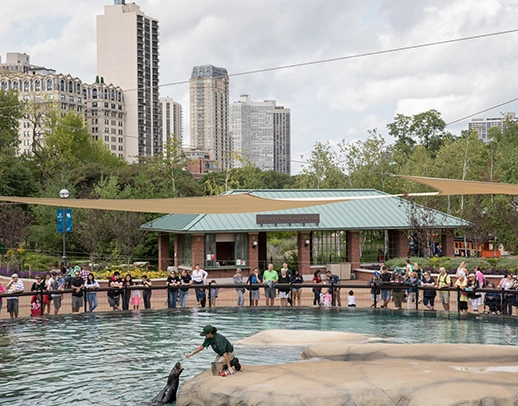
In partnership with Columbia College’s ASL-English Interpretation program, student interpreters are available on-site for daily activities, like Seal Training & Feeding and Ape Cognition & Care, in spring, summer, and fall.
For updates on when ASL interpreters will be at animal demonstrations, and to learn more about daily activities at the zoo, check the Things To Do page.
To schedule an ASL interpreter for an individual or group visit, please email access@lpzoo.org. We request two weeks’ notice.
Scripts of Training Demonstrations
Scripts of staff narration are available at each animal demonstration. Ask zoo staff for a hard copy or find digital copies below:
* Care sessions (i.e., Iguana Care, Polar Bear Care, and Ape Care) will focus on training, feeding, or enrichment depending on the animal’s interest and/or Animal Care staff’s schedule.
Back to top
Tactile Opportunities
Many exhibits have tactile elements to enhance the guest experience. Examples include:
Regenstein African Journey
- Life-sized rhino sign
- Hippo statues
- Bronze Madagascar hissing cockroach model
Kovler Seal Pool
- Relief artwork of seal-to-sea-lion comparison
Pritzker Family Children’s Zoo
- Wolf cutouts
- Wild Sapling Play Forest
- Houston Family Play Treehouse
Regenstein Small Mammal-Reptile House
Regenstein Center for African Apes
- Gorilla statues along outdoor path
- Ape face sculptures inside building
Farm-in-the-Zoo
- Rubber dirt activity
- Tractor
- Edible Garden (when in season)
- Tornado and bee interpretives
Pepper Family Wildlife Center
- Life-sized male and female lion cutouts on north side
Walter Family Arctic Tundra
- Life-sized cutout of polar bear
- Ice wall
* Care sessions (i.e., Iguana Care, Polar Bear Care, and Ape Care) will focus on training, feeding, or enrichment depending on the animal’s interest and/or Animal Care staff’s schedule.
Back to top
Sensory Information for Zoo Buildings
The zoo is an exciting, stimulating place with unique opportunities to hear, see, and maybe even smell wildlife. Sometimes these experiences occur much closer than guests may anticipate. For a less hectic visit with possibly better animal viewing, visit the zoo on early mornings, weekdays, and in fall and winter.
Here, we highlight sensory elements to identify areas that offer high or low visual and auditory stimulation.
- The free-flight exhibit is warm and noisy and has birds that might fly close to guests. This space is lit with natural light.
- When guests are standing on the bridge in the free-flight exhibit, they can be surrounded by birds on all sides. Birds may use that area as a flight path between the two sides of the habitat.
- Because of open ceiling space between habitats, birds that may not be visible to guests can be heard throughout the building.
- The hallways are dark, quiet, spacious, and less crowded. Lighting is intermittent and creates alternating dark and light areas.
- Learn more about McCormick Bird House.
Regenstein African Journey
- Lighting and noise vary throughout the building. Open spaces use natural lighting.
- The sound of running water from waterfalls may be heard.
- The building is warm and humid.
- The building includes narrow pathways that open into spaces with seating and areas to rest.
- Some of the floors are squishy.
- Some areas in this building include stairs, open air elements, water elements, and red lighting.
- In some spaces, guests may have animals behind them while they view other exhibits.
- Replica trees have roots slightly protruding into walkways.
- Learn more about Regenstein African Journey.
Regenstein Small Mammal-Reptile House
- The front rooms are dark and feature animal habitats behind glass. Pillars are positioned throughout the space.
- A small theater features chairs that can be moved. In the theater, a video plays on repeat.
- Between habitat areas, lighting changes significantly. If guests follow the typical path, the shift goes from very dark to very bright.
- As guests progress through the building, they encounter a bright second area with open-air habitats where animals are behind glass and mesh. Some of these habitats are viewable from overhead via the second-floor balcony.
- In some spaces, guests may have animals behind them as they view other exhibits.
- This building tends to be hot year-round.
- Learn more Regenstein Small Mammal-Reptile House.
Helen Brach Primate House
- This building is generally dark. Lighting comes from habitats and intermittent overhead lighting that creates alternating dark and light areas.
- This building is fairly quiet and has wide passageways and large windows.
- All the animals are behind large glass viewing windows.
- The spaces in this building are warm in the winter and cool in the summer.
- Guests may experience strong smells here.
- Learn more about about Helen Brach Primate House.
Regenstein Center for African Apes
- This building has a lot of natural light and large viewing windows.
- Some animals in this space may behave in surprising ways, including pounding on the glass, chasing each other, making loud noises, or placing fecal matter on the windows.
- Guests may experience strong smells here.
- Learn more about Regenstein Center for African Apes.
Farm-in-the Zoo
- Guests may experience strong smells at the farm.
- Seasonal animal encounters take place at Farm-in-the-Zoo. Guests may choose to participate in these.
- Learn more about Farm-in-the-Zoo.
Pritzker Family Children’s Zoo
- The building in Pritzker Family Children’s Zoo can get very loud and hectic.
- e is an indoor play area, while Wild Sapling Play Forest is located outside. Both have accessible features and encourage variation in play.
- Learn more about Pritzker Family Children’s Zoo.
General Spaces
- Special events at the zoo, like ZooLights, feature additional lights and sounds.
In winter, the zoo can be very dark during the final hours of operation each day.
Back to top
Food Service
All our food service areas have ample space for mobility devices.
For more information on the zoo’s dining options, visit our Shopping and Dining page.
Back to top
Gift Shops
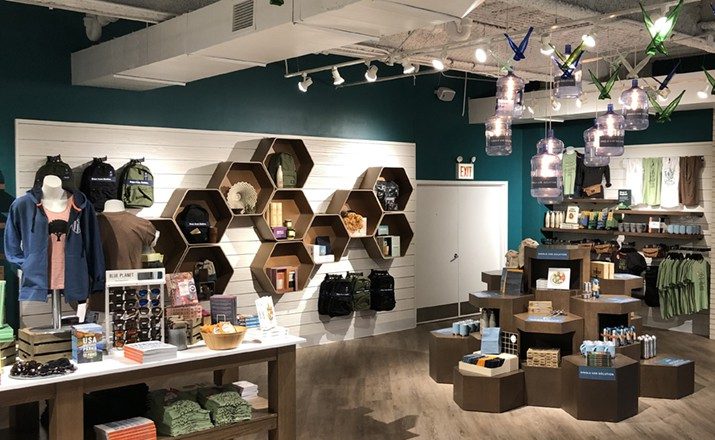
Ask staff at the Gift Shop for assistance in reaching items, reading labels, or describing products during your time in the store.
The Gift Shop sells apparel, snacks, beverages, and personal care items such as adhesive bandages, tissues, and ibuprofen.
Visit the Gift Shop online.
Back to top
KultureCity Certified Sensory Inclusive
Lincoln Park Zoo has partnered with KultureCity to improve our ability to assist and accommodate guests with sensory needs. Our objective is to provide an inclusive and seamless experience for all guests for all events. We strive to raise awareness of the needs and challenges faced by individuals with sensory processing disorders by supplying our team members with continuous training and by offering the resources and accommodations below to our guests.
Back to top
Epilepsy Foundation of Great Chicago Seizure Smart Partner
Lincoln Park Zoo staff have completed seizure recognition training, helping the zoo become a Seizure Smart Partner through the Epilepsy Foundation of Greater Chicago.
EFGC is a local organization that provides free non-medical supportive care to people living with epilepsy and their families. EFGC also provides free seizure first-aid training to school personnel and the general public. Learn more at the link below.
https://epilepsychicago.org/
Back to top
An Accessible Zoo Needs an Accessible Website
Our website is an extension of the zoo experience. Therefore, we are committed to making it as accessible as possible for all visitors. To help make our website inclusive of everyone, we adhere to Web Content Accessibility Guidelines 2.1.
Back to top
Select Partnerships
- Access Living
- Alzheimer’s Association
- Anixter
- Blind Service Chicago
- Bounce Children’s Foundation
- Camp Kids Are Kids
- Chicago Hearing Society
- Chicago Public Schools
- Columbia College ASL-English Interpretation program
- DreamNight
- Epilepsy Foundation of Greater Chicago
- Great Lakes ADA Center
- KultureCity
- Ann and Robert H. Lurie Children’s Hospital of Chicago
- Make-A-Wish Illinois
- City of Chicago Mayor’s Office for People with Disabilities
- Our Place
- Rush University
- Second Sense
- Snow City Arts
- Special Olympics
- Sunrise Senior Living
- SunriseVX
- We Thrive Together
- WeGo
Back to top
Questions & Feedback
We’re committed to improving the zoo experience for everyone. Please send feedback and questions to access@lpzoo.org or call 312-742-2067.
For immediate assistance on zoo grounds, call 312-742-2000.
Contact Us
Back to top