The Bats of Chicago

October 30, 2025

Back in the early 2010s, Lincoln Park Zoo’s Urban Wildlife Institute spent some time listening to the skies, determining which bats frequent Chicago at night. Then, in 2018, it started a community science project that continues to monitor bat activity in the region to this day. In fact, the Bat Tracker program expanded its scope recently to increase sampling, track population trends, expand partnerships, and offer hands-on research opportunities to Chicago teens—thanks to support from the Walder Foundation Biota Award.

As a result of all this data, UWI has more information about these nocturnal flying mammals than ever—but there is still plenty to learn. One thing we know: Now that the weather is turning cooler, most of the local bat species have traveled to their wintering grounds, be they local caves or warmer spots down south.

Taken in May 2025, this image shows a Bat Tracker training session featuring community volunteers and staff from the Urban Wildlife Institute.

But as we celebrate International Bat Week, with Halloween just around the corner, it’s time we became better acquainted with these nighttime neighbors. And while bats might seem particularly spooky this time of year, don’t let their haunting reputation fool you: they are an essential part of the ecosystem, even in cities. The ones in the Chicago area act as excellent natural pest control, thanks to the number of insects they eat. Bats also disperse seeds and pollinate crops. Fruit bats, such as the Egyptian fruit bats that reside in Regenstein Small Mammal-Reptile House, are necessary pollinators for native trees and crops like agave, papayas, and mangos.

Here are the eight species you have a chance of seeing in the Chicago area during the spring, summer, and fall.

Big Brown Bat

Big brown bats are city-dwellers—Illinois’ most common bat species, known for how easily it adapts to urban environments. These bats, with a wingspan of up to 16 inches, will roost in any crevice available and can be found in caves, bridges, mines, and even attics. In summer, big brown bats also roost under loose tree bark or within tree cavities. In winter, the Illinois populations fly to hibernation areas in the south.

Females of this species can live in groups of 60 or more individuals. They raise their pups together in these maternity colonies and come back to the same group year after year. Big brown bats are the most recorded bat by UWI researchers and the Bat Tracker program.


Long Lives

Bats are very long-lived for their size, often reaching 15 years of age. One bat, a Brandt’s myotis from Eurasia, was recorded to have lived at least 41 years. Because of this longevity, some research suggests that big brown bats might have “friends” within their colonies, and these friendships can last for years.


Eastern Red Bat

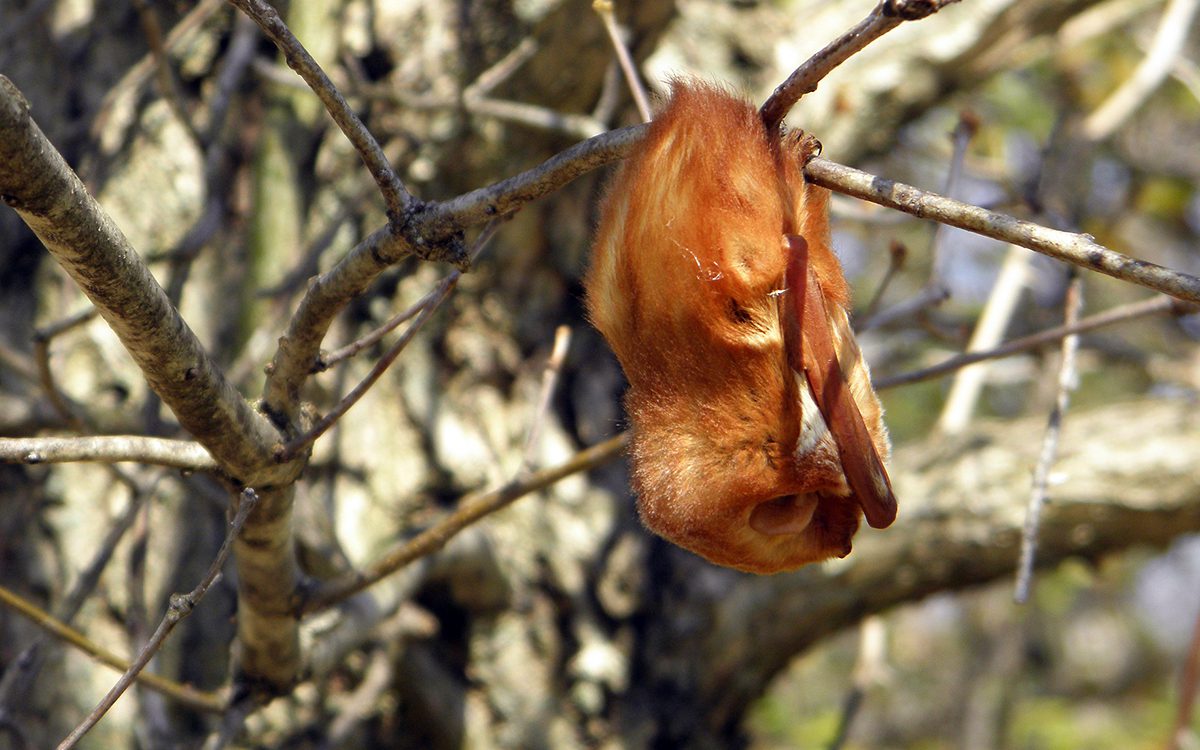
Eastern red bat” by cricketsblog is licensed under CC BY 2.0.

The most brightly colored of Illinois’ local bat community, this species has beautiful red fur. Red bats are widespread and can be found anywhere in the U.S. east of the Rockies. They are a tree-roosting species, sheltering during the day in tree crevices and leaf litter, and are thus more solitary than some bat species you know.

Although they are fairly tolerant of cold, Eastern red bats spend their winters in the southern states and have been known to hibernate on the forest floor among the fallen leaves. Unlike most bat species that typically only have one or two pups, females of this species have up to four pups at a time every year.


Bat Calls

Did you know that bats are often located and identified by their calls? In the Bat Tracker program, volunteers use specialized equipment that detects and records these calls as bats are flying around at night. Later, their frequencies can be mapped, and the visual representation of these sounds help scientists distinguish which species is which. Eastern red bats are known among scientists for their unique, easy-to-distinguish sounds, which have the dramatic and “bouncy” pattern seen below.

Spectogram image of an eastern red bat call


Hoary Bat

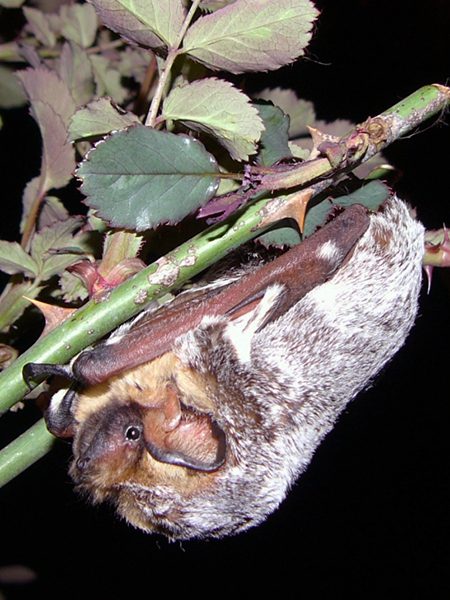
Hoary Bat” by cameracl눱 is licensed under CC BY 2.0.

The biggest bat species in the American Midwest, hoary bats weigh about 35 grams, the equivalent of about 35 pennies, and have a wingspan of about 1.5 feet. These bats are named for the grayish-white sheen of their fur and are sometimes referred to as “sky lions” due to the yellowish, furry mane around their head.

In spring, hoary bats migrate to Illinois to search for mates and good foraging grounds. Some will roost here, but others continue north and just make a stop in Illinois when they return south in the fall. They live alone in the treetops during the summer, either within foliage or inside tree cavities, and are only seen in large groups when they migrate. Despite the fact that hoary bats are generally not known to be found in cities, UWI researchers regularly hear them flying around the area, especially during the spring and fall when they are migrating through the area.

Silver-haired Bat

Another bat species named for its appearance, silver-haired bats are medium-sized and appear almost black with very subtly silver-tipped fur. As a tree-roosting bat, silver-haired bats are solitary, spending time alone in tree cavities, beneath bark or among leaves.

These bats are low fliers, feeding from near the ground up to the tops of the trees. The females give birth to two young at a time. UWI researchers have detected silver-haired bats throughout the Chicago area, including downtown, but in winter most of these bats migrate to southern Illinois or go further south.


Bat Torpor

Like other migratory bats, including eastern red and hoary bats, silver-haired bats may go into torpor, or a state of slowed metabolism and suspended animation that may last just a few hours a day, on their way to warmer climates. This allows them to lower their body temperature to conserve energy during brief periods when they are not able to forage. One study estimated that torpor can help save 91% of a silver-haired bat’s energy. In spring and fall, these bats can be spotted in Chicago in a state of torpor on tree trunks, brick buildings, and screen doors as they rest up for the next part of their journey.


Tri-colored Bat

Tri-colored bat” by USFWS/Southeast is licensed under CC BY 2.0.

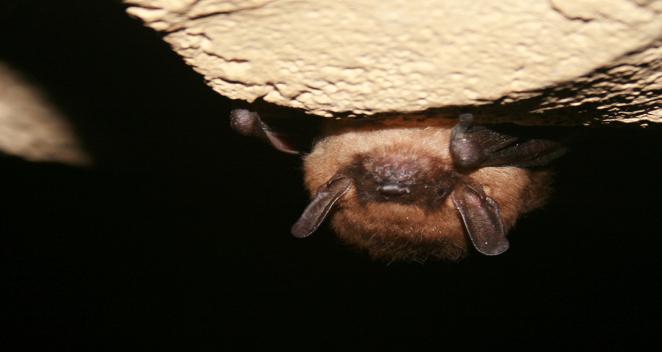
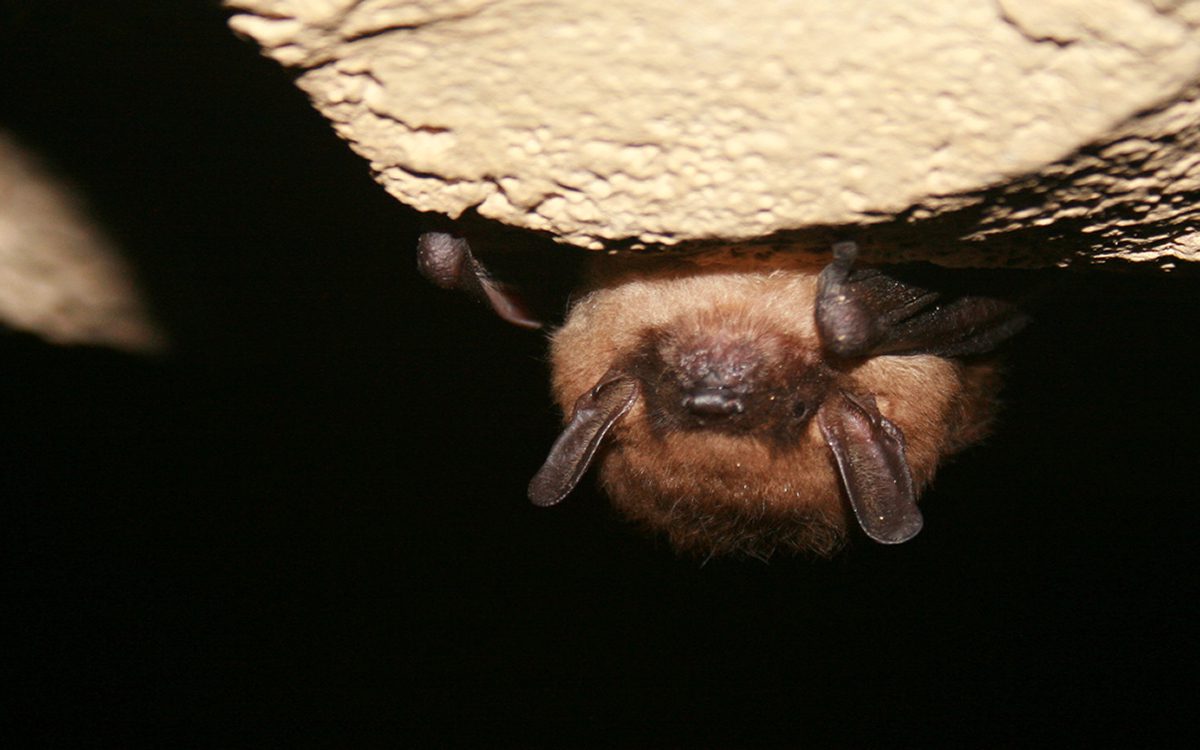
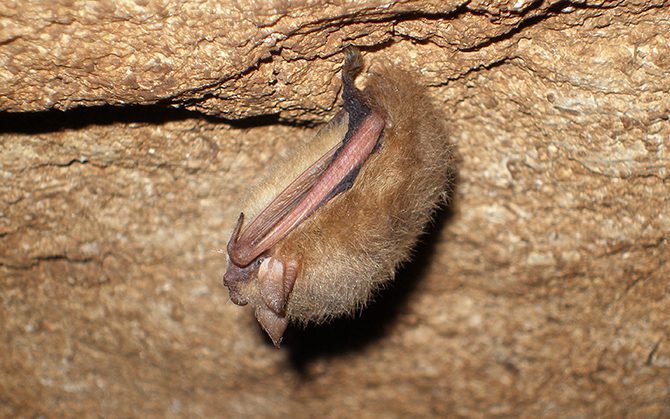
This is the smallest member of the Chicago bat community, weighing only 8 grams (or eight pennies). This once-common species is found across eastern North America, where members winter in caves and mines or even culverts in the south, where caves are sparse. They are named for their fur, which is dark at the base, lighter in the middle, and darker at the tip.

Tricolored bats exhibit an erratic, fluttery flight while foraging, usually over waterways and along the edges of forests. Females form maternity colonies where the young are born and generally give birth to two offspring in the early summer months. As a cave-hibernating species, tri-colored bat populations have been decimated by white-nose syndrome.

Little Brown Bat

Little brown bat” by USFWS Headquarters is licensed under CC BY 2.0.

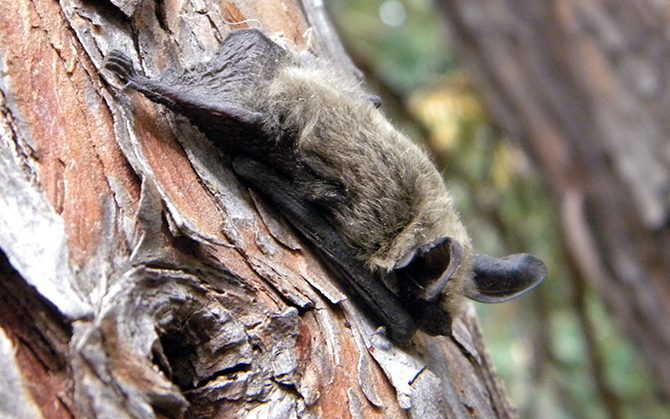
Found in many parts of North America, including most of the contiguous U.S. and parts of Mexico, little brown bats tend to roost in caves, but can also be found in trees, under rocks, and in piles of wood in summer. They have large, furry toes and dark brown fur on their back.

These bats hibernate in caves, tunnels, and mines over the winter, although maternity colonies have also been found in buildings and other human structures as well as hollow trees. They mate in the fall, after which females give birth to a single pup in the spring. This bat’s population has been decimated by white-nose syndrome. As a result, zoo scientists and Bat Trackers only record a few little brown bat calls each year.

Northern Long-eared Bat

This bat species, distinguished by and named for its long ears, is found all over North America, including most of the midwestern and eastern U.S. These bats overwinter in caves and mines and spend the warmer months in forested areas, either alone or in colonies.

Northern long-eared bats mate in summer and fall and females roost in maternal colonies, where they give birth to one pup at a time in the early summer months. Like similar bat species, these are affected by white-nose syndrome and collisions with turbines on wind energy farms. Urban researchers rarely detect this species in the city, but they may still occur at very low numbers in suburban forest preserves.


White-nose Syndrome

Several North American cave-dwelling bat species that winter in caves and mines near their summer grounds have been tragically decimated by white-nose syndrome, including three that can be found in the Chicago area. This fungal pathogen damages the bats’ wings and affects heat exchange, circulation, and water balance. Affected bats wake up too early, expend too much energy, use up their fat reserves, and starve to death. Tri-colored bats, northern long-eared bats, and little brown bats have lost up to 90% of their populations in less than 10 years.


Evening Bat

evening bat” by adwsocial is licensed under CC BY 2.0.

These medium-sized bats with short ears, brown fur, and black wings and ears are found throughout Illinois, usually living in buildings and trees. They are sometimes mistaken for smaller or juvenile big brown bats and have a distinct, acrid odor.

Evening bats roost in colonies and their winter habits are largely unknown, although they do migrate to southern parts of their range in the winter, where they stay active throughout the season. Maternity colonies, which can contain hundreds of individuals, are found in Illinois, with females bearing two offspring in late spring or summer. Evening bats may be expanding their range. Historically thought of as a southeastern species, they have recently been captured as far as Minnesota.

The original blog post, written by Julia Kilgour, was published on October 29, 2013. It has been updated and expanded.

00:00
00:00
Empty Playlist